Elastic vs. Provisioned DocumentDB: Choosing the Right Fit
Sadeel Anjum

When working with AWS DocumentDB for modern applications, deciding between Elastic Clusters and Provisioned Instances can have a significant impact on your project’s scalability, performance, and cost efficiency. Each option offers unique advantages tailored to different use cases. In this article, we’ll break down the features of both to help you determine the best fit for your needs.
What is AWS DocumentDB? AWS DocumentDB is a fully managed NoSQL document database designed to support MongoDB workloads. It excels at handling semi-structured data and scales horizontally, making it ideal for applications requiring high availability, scalability, and low-latency data access.
Elastic Clusters: When Flexibility Matters

Elastic Clusters allow you to automatically scale compute and storage independently, enabling you to handle unpredictable workloads with ease. Key benefits include:

- Auto-Scaling: Automatically adjusts capacity based on workload demands, ensuring optimal performance without manual intervention.Pay-as-You-Go Pricing: You only pay for the resources consumed, making it cost-efficient for applications with variable traffic.Seamless Horizontal Scaling: Easily add or remove nodes to handle traffic spikes or reduce costs during low-demand periods.Limitations: Elastic Clusters currently do not support full ACID (Atomicity, Consistency, Isolation, Durability) properties. This limitation may impact applications that require strict transactional consistency.Ideal Use Cases:
- Event-driven applications with fluctuating workloadsStartups or projects in their early stagesApplications with unpredictable traffic patterns
Provisioned Instances: Predictable and Stable
Provisioned Instances offer predictable performance and are best suited for workloads with steady or predictable demands. Key benefits include:

- Dedicated Resources: Allocates specific compute and storage resources to ensure consistent performance.Cost Predictability: Fixed resource allocation allows for precise budgeting and forecasting.High Performance: Fine-tuned configurations deliver optimal performance for mission-critical applications.Ideal Use Cases:
- Enterprise applications with consistent demandWorkloads requiring stringent SLAsScenarios where operational consistency is a priority
Key Considerations When Choosing
Here are some factors to help you decide:
1. Workload Pattern:
- Elastic Clusters: Best for dynamic workloads.Provisioned Instances: Ideal for steady workloads.
2. Cost Management:
- Elastic Clusters: Lower upfront costs; better for variable budgets.Provisioned Instances: Predictable monthly costs.
3. Performance Needs:
- Elastic Clusters: Designed for adaptability.Provisioned Instances: Optimized for reliability and consistency.
4. Administrative Overhead:
- Elastic Clusters: Less operational effort due to auto-scaling.Provisioned Instances: Requires careful resource planning.
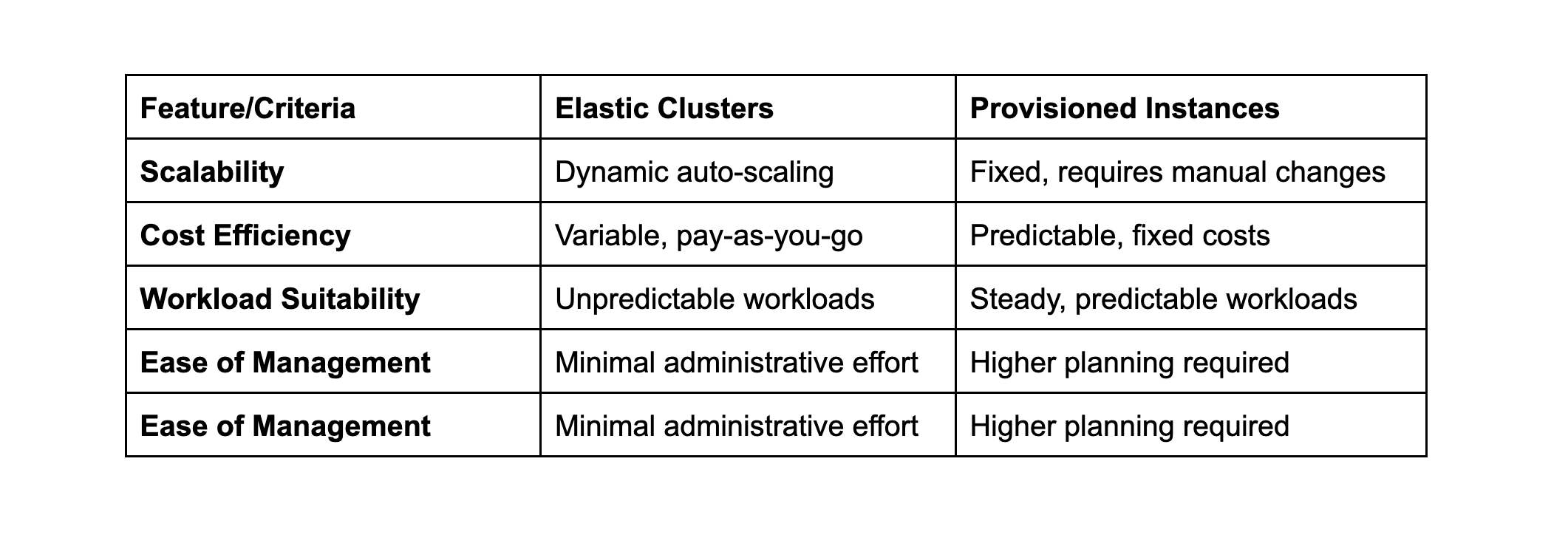
Visualising the Choice:
Here’s a simple visual to illustrate:

Conclusion
Both Elastic Clusters and Provisioned Instances in AWS DocumentDB cater to specific needs. The key lies in understanding your application’s workload patterns, performance requirements, and budget constraints. By aligning these factors with the strengths of each option, you can choose a solution that enhances your application’s efficiency and growth.
If you’d like to dive deeper into DocumentDB configurations or discuss your specific use case, feel free to connect with me on LinkedIn. I’d be happy to share insights or help you make an informed decision.
Written by Sadeel Anjum
Cloud Architect · AWS Expert